White Paper
How Social Media Can Grow Your Restaurant Franchise
By the Bright Age Digital Creative Agency team · Updated October 2026

White Paper
By the Bright Age Digital Creative Agency team · Updated October 2026

Opening a new restaurant can be both a risky and daunting business, but the incredible, growing power of social media may be the solution entrepreneurs have been searching for. Now referred to as the all-in-one marketing solution, social media is something many franchises are beginning to rely on to maximize awareness, customer relationships, and growth.
Learn how to:
With the evolution of internet marketing and the simultaneous decline of print advertising, the world of business is ever-changing. With this new current of advertising and marketing, companies are being pushed online because of its colossal user base and its ability to target markets more specifically than ever before. Because of this, businesses are leaving behind their tried-and-true traditional methods of TV spots and billboard placements. Arguably, one of the most impacted industries is franchising. Franchising is one of the biggest financial risks someone can take, but could this new wave of internet marketing guarantee success?
Making the choice to become an entrepreneur and open a business is one of the most daring risks someone can take. And it doesn’t get any easier the second or third time, if you’re lucky enough to franchise the business. Restaurant Owner puts it nicely: “There’s no denying it, opening a new restaurant, whether it’s your first or fortieth, entails risk, usually lots of it.”1 In today’s market, business franchisers are dealing with a variety of problems, some of the worst being failing to survive the critical first few years, creating a service or product there is no market for, neglecting to engage with target consumers, being unable to gauge public response, and poor executive time management. Some of these are avoidable, while others require an expert strategy to overcome.
A study published by Restaurant Owner reveals that on average 75,000 restaurants are forced to close each year, the majority of them businesses that are three years old or younger. Across all industries, the U.S. Bureau of Labor Statistics finds that roughly one in five new businesses closes within its first year, and nearly half close within five years.2 Getting through this early period can be problematic and is often painfully slow to watch. As the Houston Chronicle’s small business guide explains, “gaining awareness and popularity in your community takes time. Meanwhile you have to have the ingredients on hand to make anything on your menu at any time as well as the staff it takes to serve however many patrons may come.”3
“One of the top reasons entrepreneurs are struggling is because they are not in touch with their customers”
Forbes.com
Before launching a company, it is vital to analyze your business model in depth, namely by determining whether there is a need for it in your target market. The internet is littered with articles from publications such as HuffPost and Entrepreneur telling readers “20 reasons [they] should start [their] own business.” The bottom line of these articles is that starting a company is entirely self-serving. The only truly good reason to start a business is if you have discovered a market need, which is, unfortunately, extremely rare. Consequently, many start-ups don’t last very long because they failed to evaluate all possible consequences before launch.
An in-depth analysis of failed franchises by Forbes found that another one of the top reasons entrepreneurs are struggling is that they are not in touch with their customers through deep dialogue. However, this problem has an easy fix: social media. Social media has provided the marketplace with the most cutting-edge communication yet. With social media, companies are able to engage, respond, and interact with customers one-on-one. Understanding one’s customers, from their habits to their hobbies to their likes and dislikes, is essential to the success of a new company. Building a business, whether franchised or not, takes time, dedication, and a spot-on marketing team. Neglecting to walk in the shoes of one’s target market can lead to taking the business in an entirely wrong direction, resulting in wasted time, money, and resources. With the resources social media provides, learning about one’s target market has never been easier.
Additionally, franchising a business can be tricky because there is no promise of how the public will respond after opening day. According to Forbes, “Some franchise chains have failure rates as high as 80% to 90%, while others have almost no failures.”4 Social marketing is helping less successful franchises survive, and sturdier businesses thrive.
In an interview with eMarketer, Brian Zang, Vice President of Sales and Marketing at ShopKeep, revealed that one of the most significant hurdles for small-business owners is time: “they have so many things to do they often can’t afford to think about upgrading to a different point-of-sale thing. They’re doing everything from the books to the staffing.”5 Fortunately, this is a problem that can be easily resolved with unique marketing tactics, which will be addressed later in this paper.
To combat these common problems, companies are currently using a variety of tactics to attract their first 100 to 1,000 users, working to craft a digital footprint, and using public relations efforts, such as getting magazines, entertainment networks, and online journals and blogs to write about their restaurant.
Creating digital and social content to attract the first 100 to 1,000 users has been a well-used solution among top restaurant entrepreneurs. The key, as Christina Desmarais of Inc.com explains, is to attempt to fail faster; in other words, take proactive steps so that if the business is going to fail, it does so as early as possible, in an effort to save money, time, and resources.6 One of the ways restaurant owners can fail faster, or even succeed sooner, is by becoming extremely well acquainted with the type of consumer that is likely to be loyal to the brand, and then using those well-learned demographics in tailored campaigns. Common methods that new business owners apply to brand plans include targeting and engaging with key influencers on social media, email campaigns, and an incentivized referral program. While social media is a low-cost, high-success advertising platform, email campaigns aren’t always effective, especially when they are too long, which is the case more often than not. Furthermore, many business owners are dealing with the repercussions of other drawbacks and mistakes, one of the leading faults being not isolating the variable.
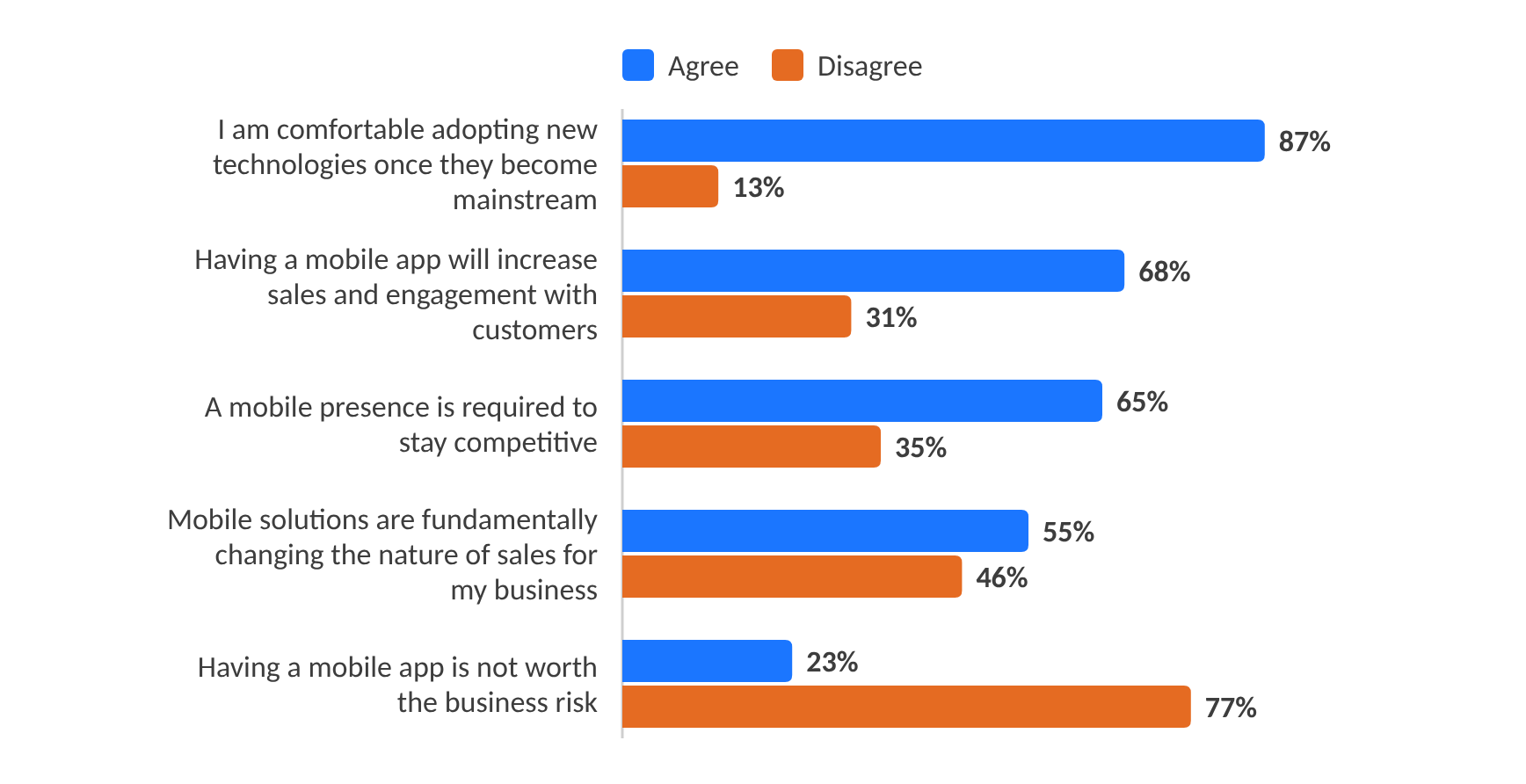
Many companies, when starting out, want to have it all, so they try it all. They exhaust nearly every marketing outlet their budget allows, but when business picks up, they often get too preoccupied to isolate variables and track their efforts. It is vital to study which outlets are yielding sales and which aren’t. Failing to do this is a form of neglecting to understand the primary audience the company appeals to, and that is arguably the biggest mistake any business owner can make. The next biggest error is a faulty or outdated attitude toward mobile solutions. While nearly 65% of small businesses agree that a mobile presence is required to stay competitive, and 68% also agree that having a mobile app will increase sales and engagement with customers, 23% feel that having a mobile app is not worth the business risk, according to a study completed by eMarketer. Meanwhile, nearly 87% of respondents stated that they are only comfortable adopting new technologies once they become mainstream.7 Herein lies the problem.
eMarketer
Share of U.S. small businesses that agree or disagree with each statement
Source: eMarketer
Nearly all entrepreneurs understand that opening a new company is a substantial monetary risk, but reducing this risk is an uncertainty in itself. Advertising and marketing is a chance that has to be taken; otherwise, a business will most likely fail, and fail rather rapidly. With success comes risk, and as the world of digital and mobile expands into the marketplace, business owners must expand with it. Integrating social media into marketing is required to stay competitive and is worth the small risk that occasionally accompanies it.
“Social media will be adopted by 80% of franchisors in the next two to three years, but it won’t be called social media. It will just be the way we all do business”
Allbusiness.com
Many businesses, however, have made the transition and are reaping the benefits social media and digital marketing have to offer. Del Popolo, a San Francisco–based pizza company, is one of these. Named by Business Insider as one of the “Coolest New Businesses in America,” Del Popolo started out as a famed little food truck with a giant pizza oven and has since expanded to a permanent location on Nob Hill. Del Popolo is everywhere. With active, up-to-date accounts on Facebook, Yelp, Twitter (now X), and Instagram, as well as a beautiful, user-friendly website, it is safe to say business is booming. In addition, it has used public relations and has been featured in many articles by reliable sources such as the New York Times, San Francisco Chronicle, ABC TV, LA Times, the Wall Street Journal, and Food & Wine magazine. As an example of a company that has effectively employed a social media marketing campaign, Del Popolo’s geographical expansion is a testament to its online success. Other restaurants leading in social media marketing include familiar brands like Pizza Hut, Ben & Jerry’s, Dippin’ Dots, and White Castle, according to the National Restaurant Association.8
While these franchise companies may be making headlines with their social media tactics, they were simply leading the pack in what was expected to quickly become a mass movement. Joel Libava, also known as “The Franchise King,” told AllBusiness.com that “social media will be adopted by 80% of the franchisors in the next two to three years… but it won’t be called social media. It will just be the way we all do business.”9
While there are many companies that survive on a basic, run-of-the-mill online presence, social media is completely changing the way business is conducted and sales are generated. Gini Dietrich, CEO of Arment Dietrich, a communications firm specializing in franchise and business services, states that “Ninety-three percent of Americans expect companies to have a social media presence and are using [social media] to participate in conversations, engage with brands, and find job opportunities.”9 If consumers expect companies to have a social media foundation, businesses will ultimately miss out on many opportunities if they lack this online presence. Accordingly, shifting radio and television spots to outlets like Facebook and YouTube is one of the paramount techniques required to remain competitive. The National Restaurant Association supports this idea with the example of Wendy’s video series titled #PretzelLoveSongs.8 The company released the campaign to promote the launch of its new Pretzel Bacon Cheeseburger, and it was very well received. Of the 83 million people who watched the videos, most viewed them on Facebook, not on television. Evidently, the consumer audience is far more accessible online than in front of the television. This corresponds with the rising new age of social media and online entertainment over television. Streaming services such as Hulu, Netflix, and Amazon Prime Video continue to grow, and the number of impressions from a commercial spot on TV is declining.
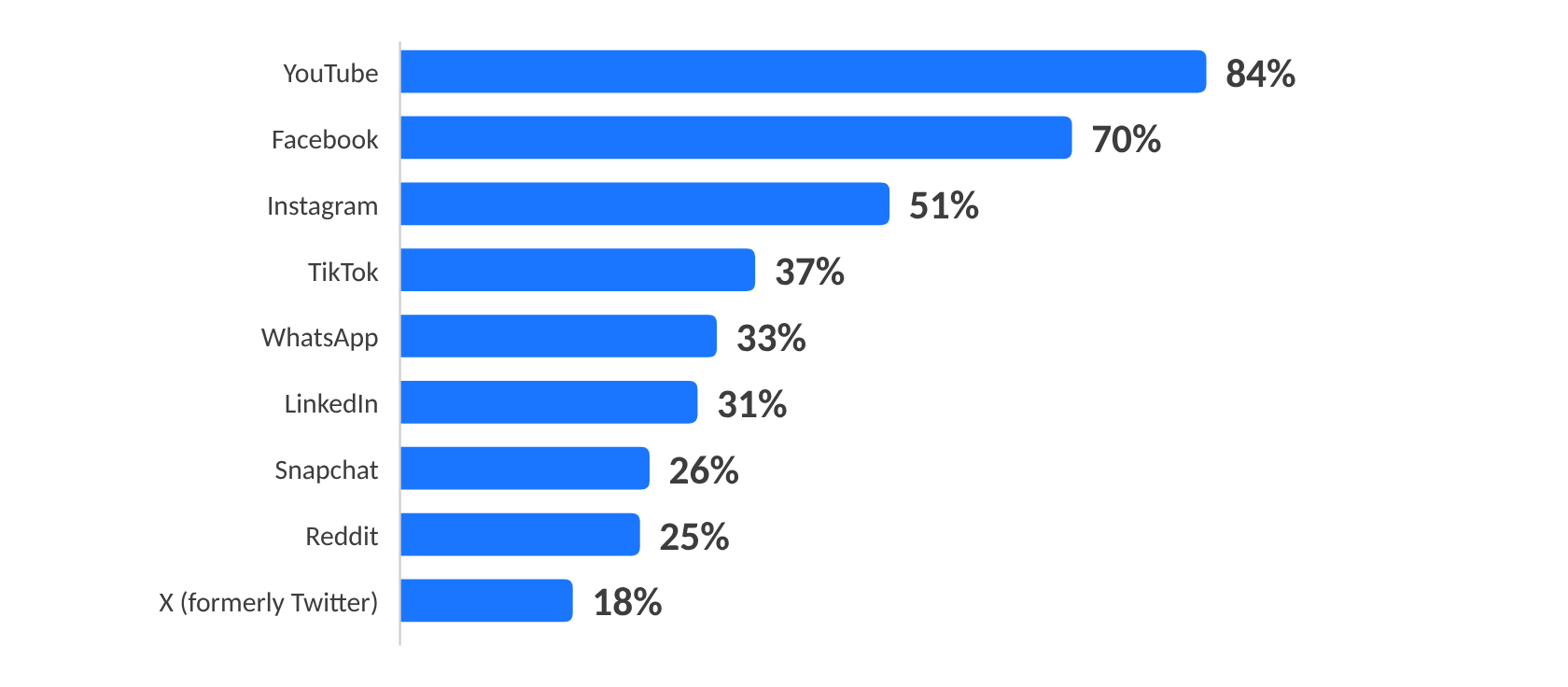
DataReportal found that there were 5.79 billion social media user identities worldwide as of April 2026, an increase of 294 million in just one year.10 With this number only growing in the years to come, business owners have no choice but to plan accordingly. In the United States, 84% of adults now use YouTube, 70% use Facebook, and 51% use Instagram, according to Pew Research Center,11 and worldwide, Instagram passed 3 billion monthly active users in 2025.12 This growth, in addition to the overwhelming social population present today, makes it absolutely essential for business owners to make the conversion, and there are ways to make the transition seamless.
Share of U.S. adults who use each platform, 2026
Source: Pew Research Center, Social Media Fact Sheet, 2026
As Sprout Social explains, there are numerous ways to elevate a company’s presence on social media. One of the most important is to avoid making the content purely promotional. A 3:1 engagement-to-promotion ratio is a golden rule to live by. In other words, a restaurant franchise should publish three engaging posts, such as recipes, quotes, interesting facts, or a peek behind the scenes, for every promotional post, such as new deals or special offers. This method keeps the audience from feeling like they’re constantly being advertised to and keeps them entertained, so that when they do see an ad, they are more willing to engage with it. Other important tactics for managing a restaurant franchise’s social media accounts include responding to customers in a timely manner, sharing hours of operation and locations, offering exclusive deals and information, taking advantage of hashtags, and tagging others in posts.13 Franchising.com echoes these essential social media marketing practices, stressing the importance of sharing relevant content and specifically advising against repetitive brand posts. Franchising.com further notes that posting entertaining yet relevant content can be one of the most effective ways to approach social media from a sales perspective, as “it’s imperative to share information beyond the brand message and certainly of the franchise opportunity itself.”14 While each brand requires a specialized social media marketing campaign designed with a detailed target market in mind, the tips recommended by Sprout Social and Franchising.com apply to nearly every category of company in the marketplace.
“Recognizing how social media has revolutionized today’s marketing industry is simply unavoidable”
Franchising.com
Social media has the power to completely revolutionize a business or restaurant franchise. The evidence is everywhere. One case that exemplifies the power social media has over franchising is a particularly notable campaign H&M launched during the initial discovery phase of the consumer life cycle. Using Google AdWords and social networks, the brand personalized its advertising by showing consumers which of their friends had endorsed or liked the brand on their social media profiles. This strategy proved successful, as H&M saw a 25% increase in click-through rates from the campaign alone. The success of social media marketing speaks for itself: 76% of consumers say content on social media has influenced a purchase in the past six months.15 Franchises have also been transformed by user reviews on sites such as Yelp, as well as on blogs and social channels; 85% of consumers say they are more likely to use a business after reading positive reviews.16 With society’s worldwide shift online, social media has directly led to an increase in sales. Recognizing how social media has revolutionized today’s marketing industry is simply unavoidable, and “understanding how social media [is] need[ed] to operate in a franchise environment is critical to future success,” says Paul Segreto, President and CEO of FranchisEssentials.14 The next step after acceptance is understanding who your audience is.
Litchfield Research performed a study on consumer opinions of restaurant franchising with a sample of 689 participants. The majority of participants, with a median age of 47, answered yes to the question “Do you frequently visit, or are you most loyal towards, one fast-food restaurant over others?” When asked which restaurants they were most loyal to, 23% responded with McDonald’s, 11% with Wendy’s, and 10% with Subway.17 Loose conclusions can be drawn from this study and connected to social media, particularly in light of the Wendy’s Facebook campaign mentioned earlier, but ultimately, far more research is needed on how franchises engage on social media. So we conducted our own research on consumers’ habits, opinions, and patterns with regard to social media and restaurant franchising.
After surveying 100 participants with a 15-question survey about their experience with restaurant franchises on social media, we discovered some compelling trends.18
“62% reported that they follow restaurants on Facebook, with 13% on Instagram and 11% on Yelp”
Bright Age Survey
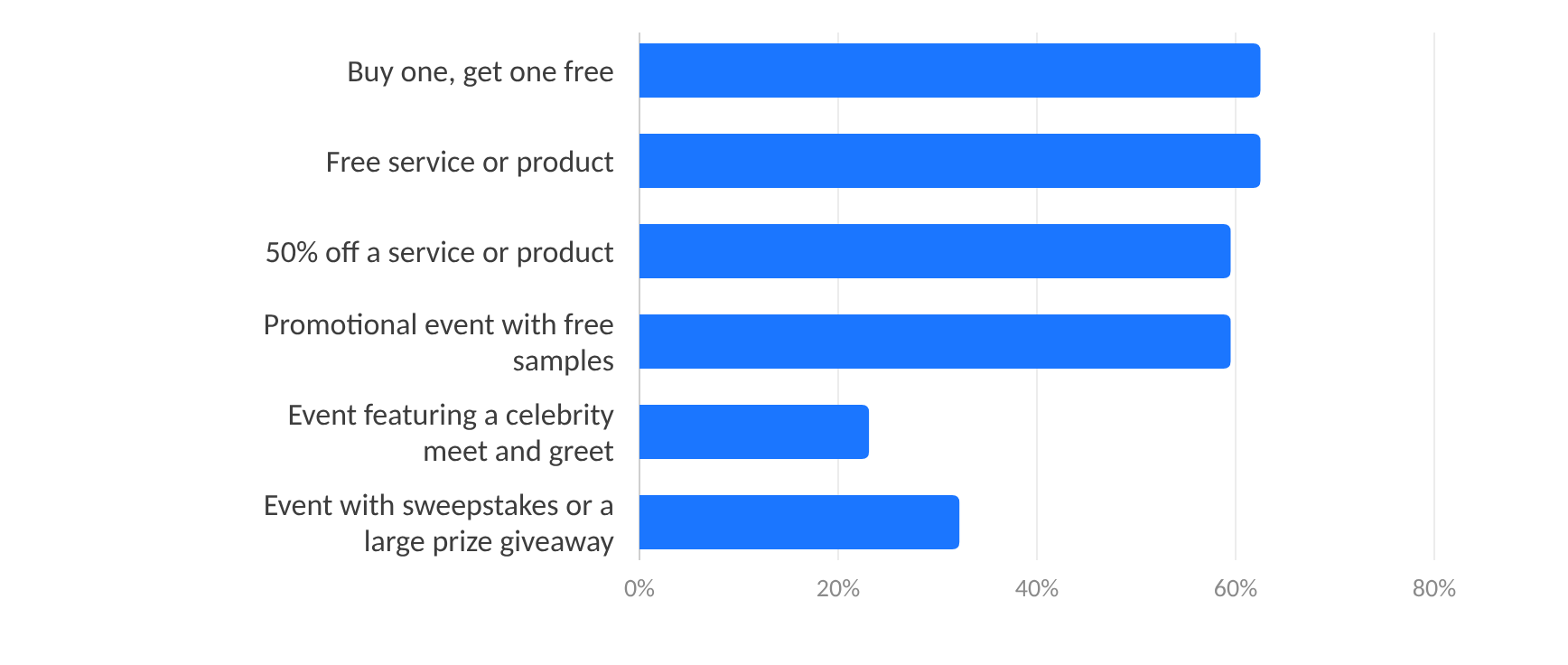
Of the participants in the study, 62% reported that they follow restaurants on Facebook, followed by 13% on Instagram and 11% on Yelp. With such a large online audience, the study reinforces how influential social media is in the restaurant business. Nearly 47% of respondents stated that they find out about restaurants on social media, and 88% revealed that they discover them from friends and family. With these statistics, employing the power of social media is vital. With a lower CPM than other traditional advertising tactics, the advantages far outweigh the work of maintaining a presence on social sites. While 74% of people in the study said they had never attended a grand opening, more than 60% said they would be drawn to such an event if they received word of any number of promotional offers, such as buy one get one free, a free service or product, 50% off a service or product, or a promotional event with free samples (see chart below). Digging a bit deeper, 63% of the same sample stated that either a coupon for one free meal or 50% off their first meal would drive them to try a new restaurant. Offers like these are relatively easy to implement, and with such high response rates, these promotions are more than likely to produce conversions.
Bright Age Survey
Bright Age survey of 100 randomly sampled U.S. participants, ages 18–60
The superiority of online marketing compared with more traditional methods such as television, print, and guerrilla tactics was confirmed by our research, with nearly 77% of participants answering that they find brands on social media trustworthy. Social media is customizable and tailored to audience demographics. Therefore, when approached with sponsored content by brands, consumers are likely to have a more positive and open outlook on the brand.
Furthermore, over 87% of respondents in our survey said they check online restaurant reviews before visiting. With this data, we are even more confident in our earlier claim that online marketing can be the ultimate key to franchise success.
From this research, we conclude that a social media strategy is in fact one of the most successful methods for opening a new restaurant franchise. Marrying word of mouth with advertising, the study shows that Facebook is the best platform to use in such a campaign as well. Furthermore, the results make clear that the majority of consumers are interested in attending a grand opening event and sampling the product or service for free. This is an extremely beneficial tactic to employ because it grows brand-loyal customers. If patrons have a good experience with a new service, they are likely to return and even tell friends and family about it. In addition, a restaurant franchise could reap additional benefits from the event by offering discounts in exchange for a customer’s “check-in” on social media. This strategy is both feasible and effective, as more than 80% of survey respondents answered “yes” to “Would you be willing to ‘check in’ or ‘share’ an event or restaurant visit on social media to receive a discount at a restaurant?”
Dog Haus, a craft-casual hot dog restaurant, opened its first franchised location in Canoga Park. To establish a loyal following in the area, Dog Haus partnered with Bright Age to develop an extensive marketing campaign to build a strong local presence and generate buzz leading up to the grand opening event. Facebook was the most emphasized platform in the campaign, as Bright Age created two ad sets that targeted students and adults separately. The marketing team developed unique messaging for each age range and was able to reduce the cost per Page Like and increase the click-through rate. These ads ultimately raised public awareness in the form of Page Likes and post engagement. In addition, a teaser ad built anticipation for Dog Haus’ grand opening special offer. To ensure high attendance on grand opening day, a boosted post highlighted the grand opening event and opening-day offer.
Designed to build anticipation, encourage sharing, and drive viral and organic impressions, the campaign produced phenomenal results that exceeded both Dog Haus’ expectations and Bright Age’s initial projections. Dog Haus Canoga Park served over 1,000 meals on opening day and continued to receive a nonstop flow of guests, serving an average of 350 meals per day in the weeks following the grand opening. In the two weeks leading up to the grand opening, Bright Age grew the location’s Facebook Page Likes by 1,636% and achieved a click-through rate of over 7.2%, receiving over 38,000 impressions. In total, the campaign’s ads generated 274,000 Facebook impressions, 5,515 total interactions, 4,176 total likes, 796 comments, and 543 post shares. To call the campaign a smashing success would be an understatement. Since the conclusion of this campaign, Bright Age has worked with Dog Haus to build the same loyal following for more than 20 additional franchise locations across the United States.19
The journey consumers have taken from traditional to online media is statistically substantial. The findings of our study support the initial premise that social media is an invaluable and cost-efficient tool that yields one of the best CPM rates of all advertising platforms. Numerous tactics can be used on social media, one of the greatest advantages being the extremely specialized niche markets that can be precisely targeted. After discussing the problems, solutions, and research involved in building restaurant franchises, it is clear that one of the best decisions a franchise owner or entrepreneur can make is hiring a social media marketing agency to create a strong social foundation on the platforms that hold the attention of potential customers. Bright Age is one of these agencies, and is extremely well-versed in franchise openings and marketing.
Social media builds awareness and a local following before opening day, creates a direct dialogue with customers, and lets owners target ads to the people most likely to visit, at one of the best CPM rates of any advertising platform.
In Bright Age’s survey, more than 60% of participants said they would be drawn to a grand opening by buy one get one free, a free product, 50% off, or a promotional event with free samples. 63% said a coupon for one free meal or 50% off their first meal would get them to try a new restaurant.
Facebook. In Bright Age’s survey, 62% of participants follow restaurants on Facebook, compared with 13% on Instagram and 11% on Yelp. Reviews matter too: over 87% of respondents check online restaurant reviews before visiting.
About a quarter. A 3:1 engagement-to-promotion ratio means publishing three engaging posts for every promotional one, so followers stay interested instead of tuning out ads.
Bright Age Digital Creative Agency is a boutique company located in Westlake Village, California, dedicated to developing innovative and award-worthy campaigns that clients can be proud of. Bright Age has earned a Gold award for Social Campaign from the AVA Digital Awards, as well as a Platinum award for Social Media Consumer Engagement from the Hermes Creative Awards. Bright Age offers a wide span of digital services, including social media advertising, market research, search engine optimization, and many more. In particular, Bright Age offers clients online reputation management and social media management services. What makes Bright Age unique among digital marketing agencies is that everyone working at the company holds at least a four-year college degree with an emphasis on marketing or advertising.20
Talk with our team of social media experts who understand your brand and the strategies that work in your industry.


